Posts

Florence Price’s The Oak

Image
This March, the Daily Classical Music Post will introduce you to some of the most wonderful music ever composed—and, yes, it will all be by women composers! https://youtu.be/xqgTVyIby-o The American composer Florence Price (1887–1953) was the first African American woman composer to have a work performed by a major symphony orchestra. Her Symphony in e minor, which won first prize in the Wanamaker Foundation Awards in 1932, received its premiere in 1933 by the Chicago Symphony Orchestra. Although she won many awards and did have some works published and performed in her lifetime, she still faced discrimination and was unable to get most of her compositions performed. She once wrote to Serge Koussevitzky, "Unfortunately, the work of a woman composer is preconceived by many to be light, frothy, lacking in depth, logic, and virility. Add to that the incident of race—I have Colored blood in my veins—and you will understand some of the difficulties that confront one in such a position....

Élisabeth Jacquet de La Guerre’s Harpsichord Suite No. 1 in D Minor: I. Prelude

Image
This March, the Daily Classical Music Post will introduce you to some of the most wonderful music ever composed—and, yes, it will all be by women composers! https://youtu.be/bVaiR0P_gOI The French composer Élisabeth Jacquet de La Guerre (1665–1729) was a child prodigy, born into a family of musicians and instrument makers. Unlike many of her contemporaries, she was encouraged to compose and perform (her main instrument was the harpsichord). She married the organist Marin de la Guerre in 1864, and spent the rest of her life teaching, composing, and performing. In his biographical chronicle of the most famous French poets and musicians of the 18th century, Évrard Titon du Tillet placed her next to Lalande and Marais, right below Lully! That is how acclaimed and respected she was. Other writers described her as "the marvel of our century"; she even gained the patronage of Louis XIV, who supported her financially and encouraged her. Jacquet de La Guerre did not only compose for t...

Francesca Caccini’s La liberazione di Ruggiero dall'isola d'Alcina

Image
This March, the Daily Classical Music Post will introduce you to some of the most wonderful music ever composed—and, yes, it will all be by women composers! https://youtu.be/WYfM65BSodA https://youtu.be/lsBfTRvSETY You may be surprised to learn that one of the first operas ever written and performed, La liberazione di Ruggiero dall'isola d'Alcina , was composed by Francesca Caccini ( 18 September 1587–after 1641) in 1625. "La Cecchina" was one of the most highly-paid musicians in Tuscany, and she was famous throughout Europe for her beautiful harmonies and precision in her compositions. La liberazione di Ruggiero dall'isola d'Alcina , a 75-minute-long comedy-ballet, was wildly popular from its first performance. Sadly, this is the only one of her stage works that survives. My classical music post for today is Francesca Caccini’s La liberazione di Ruggiero dall'isola d'Alcina.

Ignatius Sancho’s Minuet 5th

Image
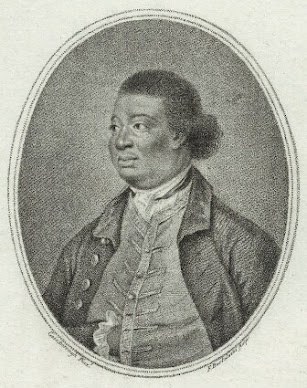
This February, the Daily Classical Music Post celebrates Black composers and musicians whose music has been suppressed and ignored. All of these musicians should be added to the music history and music theory curriculum. https://youtu.be/4cNE8prdcJA Throughout February, I have highlighted works by Black composers throughout history, and although I have spent my life studying classical music, I discovered many composers who I had never heard of. The classical music curriculum has to change.  A great example of someone who should be in every music history textbook is Ignatius Sancho (c. 1729–1780). Sancho was born on a slave ship. His early life was spent working as a slave in a well-off household in Greenwich, England. Encouraged in his studies by a neighbor, the Duke of Montagu, Sancho was emancipated and was employed as a butler in the Montagu house. When he retired from that position, he owned and ran a small grocery shop in Westminster. Brycchan Carey says, “Sancho composed musi...

Adolphus Hailstork’s Symphony No. 2

Image
  This February, the Daily Classical Music Post celebrates Black composers and musicians whose music has been suppressed and ignored. All of these musicians should be added to the music history and music theory curriculum. https://youtu.be/ZasNkYyrEJQ Adolphus Hailstork (born 1941) spent most of his childhood in Albany, NY, where he sang in a church choir. This early exposure to choral music can be heard in all of his works, not just his vocal music, through melodic lines and harmonies. He began studying the violin when he was eight years old but soon switched to piano and organ. He quickly became interested in composing: “I liked the piano because I could sit and improvise for hours, and that's when I decided I preferred to improvise rather than to practice my scales and arpeggios. That's when I decided ‘Hey, maybe I better go on to Composition!’ I love making up stuff!” James Reel says, “ Hailstork studied composition with Mark Fax at Howard University, where he earned his b...

Brittany J. Green’s “Connected”

Image
This February, the Daily Classical Music Post celebrates Black composers and musicians whose music has been suppressed and ignored. All of these musicians should be added to the music history and music theory curriculum. https://youtu.be/Izi5Jc9yeEo The music of Brittany J. Green (born 1991) has been described as “cinematic in the best sense.” As she says on her website ( http://www.brittanyjgreen.com/ ), her music “is centered around facilitating collaborative, intimate musical spaces that ignite visceral responses. The intersection between sound, movement, and text serves as the focal point of these musical spaces, often questioning and redefining the relationships between these three elements.” Green was encouraged by her high school band director to arrange and also compose works for the band. She said, “Having feedback and validation at such a young age, I think, was important and gave me the foundation and confidence to continue to compose and share my work. I’ve been fortunate t...

Daniel Bernard Roumain’s String Quartet No. 5, “Parks”

Image
This February, the Daily Classical Music Post celebrates Black composers and musicians whose music has been suppressed and ignored. All of these musicians should be added to the music history and music theory curriculum. https://youtu.be/6As16bev638 https://youtu.be/_dx3LXTgADI https://youtu.be/EwArv7q3wCU Daniel Bernard Roumain (born in 1970) blends funk, rock, hip-hop, and his classical music training in his compositions and performance pieces. His list of works includes everything from orchestral pieces to chamber works to solo violin to opera to . . . well, the list is endless. He is also highly regarded as an educator. His live performances are wonderful and exhilarating.  DBR’s String Quartet No. 5, “Parks,” was composed in 2005 and is dedicated to Rosa Parks. DBR said about this work, “As a Haitian-American composer, I was raised by immigrant parents from Haiti, who experienced American life both before, and after, the Civil Rights Act of 1964. Their views were informed by l...